There was a rock/metal webcomic called “3 Chord Dorks” that I enjoyed when it was being updated regularly. Here’s one of the comics:
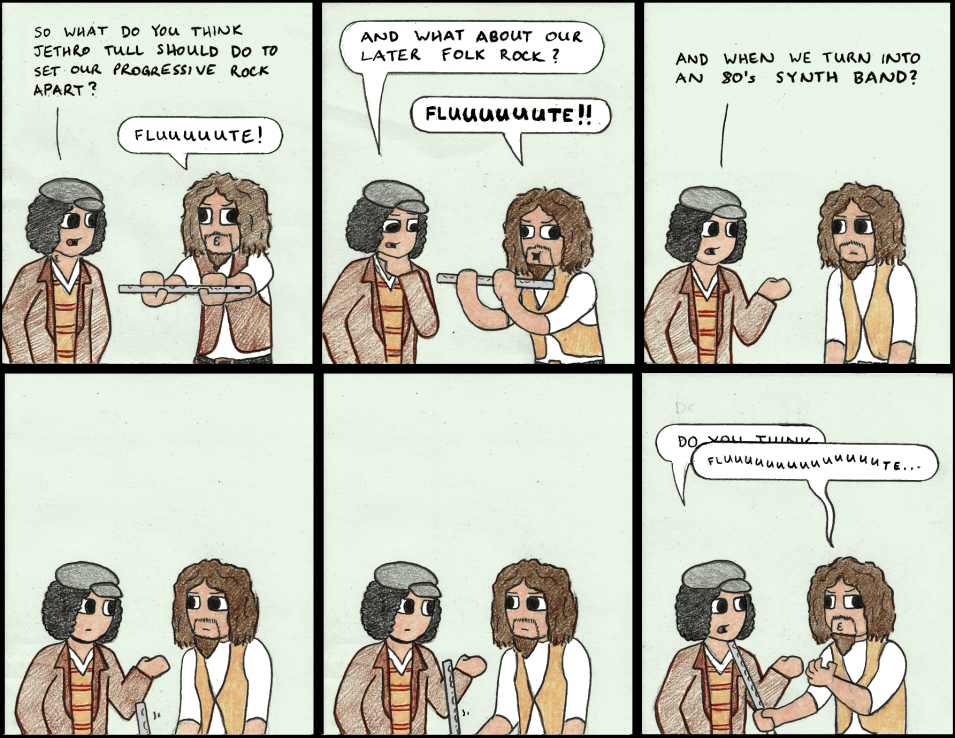
While this is hilarious and true, Jethro Tull’s sound was defined by more than just flutes. Unlike many British bands of the Sixties and Seventies who tried to sound American, Jethro Tull were openly and unmistakably British. My favorite Jethro Tull album, 1975’s Minstrel In The Gallery, is a prime example.
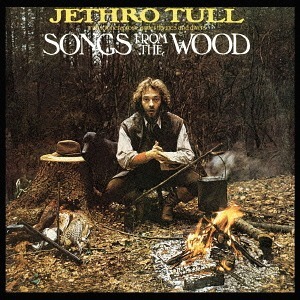
But I digress. As alluded to in the comic, Jethro Tull released a trilogy of “folk rock” albums in the late Seventies, by which I mean they were progressive rock albums inspired by English folklore rather than conventional folk rock. I’ve seen the term “folk prog” used to describe the trilogy, and that’s certainly more accurate. Frontman Ian Anderson (the “fluuuuute” guy in the comic) jokingly described the trilogy’s first installment as “country rock, but in the British sense,” which brings us to the aforementioned first installment: Songs From The Wood, released in February 1977. The album’s big single, “The Whistler,” was the band’s last ever Hot 100 entry, peaking at #59. You can tell the album is progressive rock because it has synthesizers, though that arguably means the band did a better job than Cat Stevens incorporating synthesizers into folk rock. In fact, Songs From The Wood is often regarded as one of Jethro Tull’s best albums. Even Ian Anderson himself supposedly has it in his top five. While I didn’t love the album when I first heard it years ago, I enjoyed it much more upon re-listen. “Hunting Girl” and “Velvet Green” are highlights. I’ve never been to England, but Songs From The Wood makes me feel like I’m right in the middle of a British forest. I recommend it, largely because now I don’t actually have to go to the U.K.


Leave a Reply